
What this 10P10C Modular Plug actually is
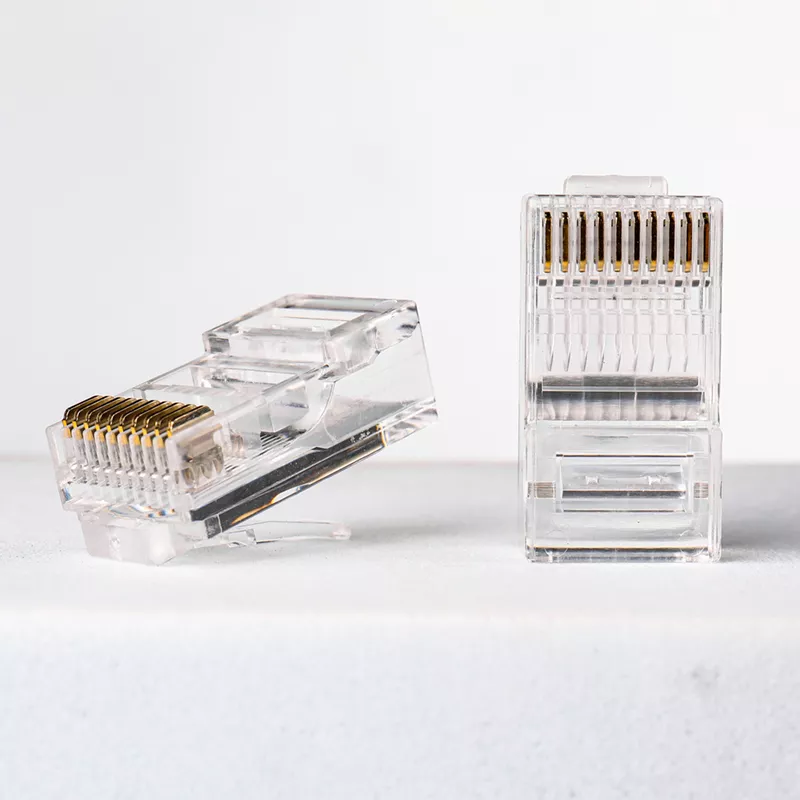
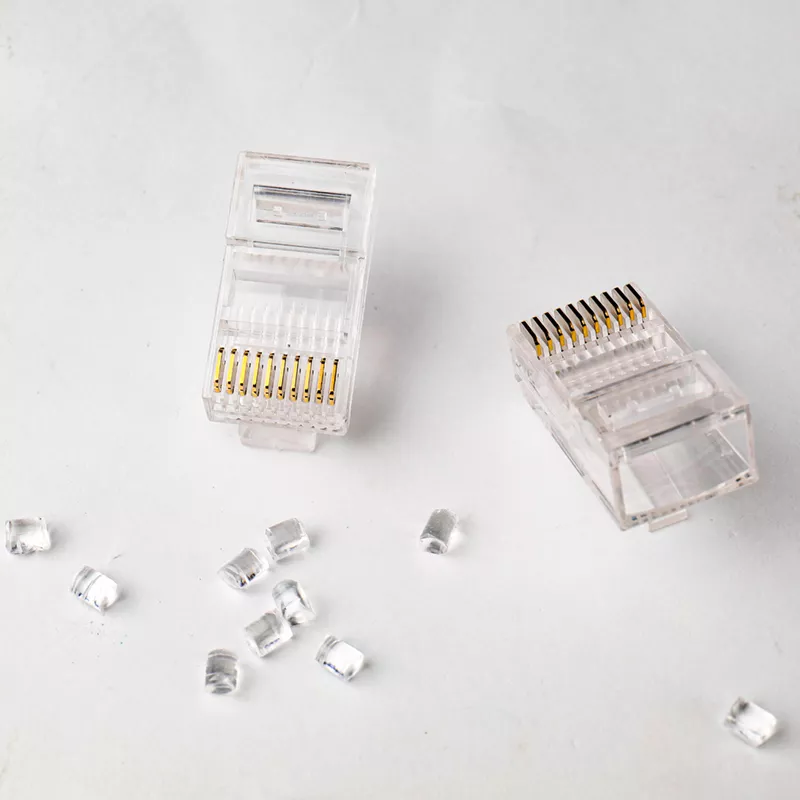
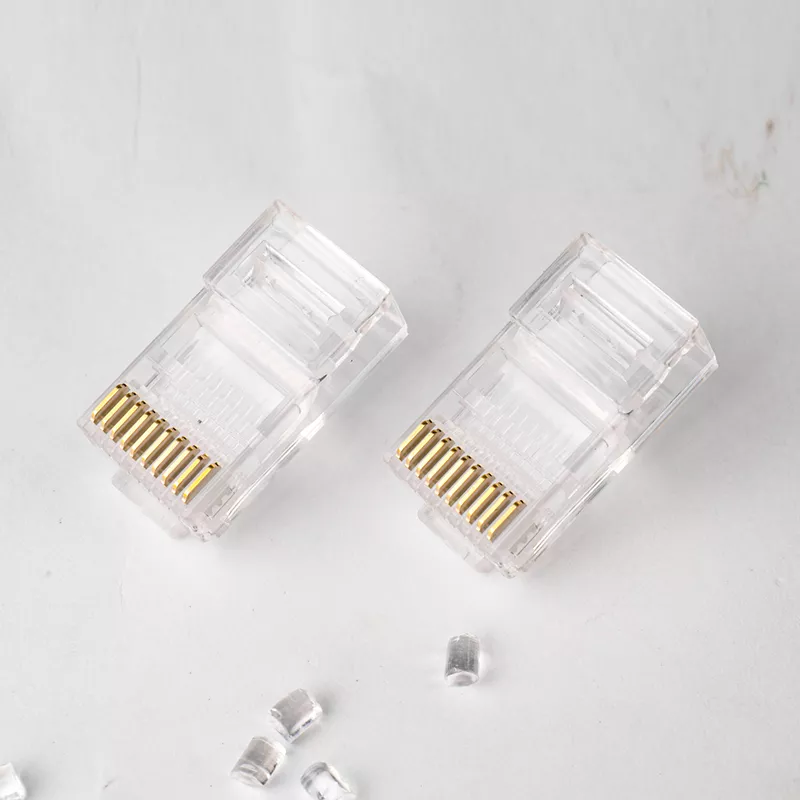
The 10P10C Modular Plug (RJ50) is a ten-position, ten-contact modular connector. English buyers should order it as a modular plug or connector, never a “crystal head.” In the trade it is labeled 10P10C and almost always sold as RJ50. That RJ name is a catalog habit, not a formal registered-jack code in the old USOC list. The body belongs to the same family as telephone and Ethernet plugs, but the two extra contacts change the mating envelope. This item sits in our RJ11 Plugs (4P4C / 6P4C) line for cable assemblers and device OEMs who already know the jack on the scanner, UPS, or controller is ten-wide.
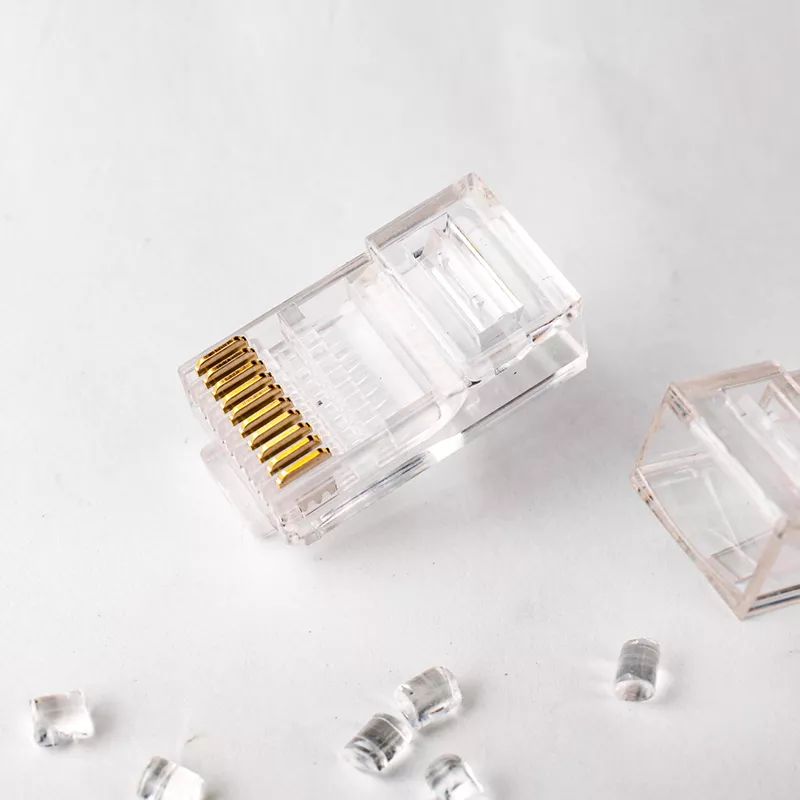
Buyers land here after a failed Ethernet order: an 8P8C end looks similar in a photo, crimps on the same bench, and then will not enter the jack. Count the gold pads. Ten pads is this plug. Eight pads is RJ45. Six is telephone. That one check saves a week of freight.
10P10C, RJ50, and why RJ45 is the wrong cousin
Positions-and-contacts notation is the only unambiguous language. 10P10C means ten slots, all loaded. 8P8C is the Ethernet plug sold as RJ45. 6P4C / 6P6C cover RJ11/RJ12 voice. The clean reference for naming is the registered jack definition: RJ numbers describe wiring at the network interface, not every plastic body in a bag. A 10P10C plug will not fit an 8P8C jack. An 8P8C plug may sit in some 10P10C jacks and leave the outer two contacts idle — useful for a bench test, dangerous as a production assumption.
Bandwidth is not why the extra pins exist. 10P10C is almost never a five-pair gigabit channel. The ninth and tenth contacts usually carry power, sense, trigger, or handshake on RS-232 and RS-485 tails, scanner yokes, and UPS signal ports. There is no T568A/B for this connector. Two cables that look identical can be wired to two different machines. If your BOM also needs the eight-contact Ethernet end, see Cat7 Shielded RJ45 Plug 8P8C STP, Gold-Plated 10Gbps Modular Connector with Separator rather than forcing this ten-contact body onto Cat6.
Construction: housing, contacts, and gold
The shell is polycarbonate — clear so the assembler can see whether every conductor reached the front face before the die closes. Flame class is typically UL 94V-2. The latch is the part that fails in cheap lots: it should take a full bend and still click. We mold the tab thick enough for scanner guns that are yanked daily, and we can add a boot when the lead will live in a bundle (snagless).
Contacts are phosphor bronze with a nickel underplate and gold plating on the wipe surface. Gold thickness is a real RFQ field: flash, 3µin, 15µin, 30µin, or 50µin. Flash oxidizes after warehouse time; 50µin is what UPS and POS programs usually write down. The contact is an insulation-displacement blade: the prong cuts the enamel and cold-welds to copper when you crimp. Two-prong blades prefer stranded; three-prong blades prefer solid. Say which cable you have. Mixing them is how “it worked on the tester and failed on Monday” starts.
Specifications
Values below are the factory default window. Anything you put on the PO overrides the row.
| Parameter | Value |
|---|---|
| Interface / common name | 10P10C modular plug, commonly called RJ50 (not a formal USOC jack) |
| Positions / contacts | 10 positions, 10 contacts |
| Body width vs RJ45 | Same modular family, extra two contacts — will not mate an 8P8C jack |
| Housing | Clear polycarbonate, typically UL 94V-2 |
| Contacts | Phosphor bronze, nickel underplate, gold flash to 50µin |
| Termination | IDC / crimp, 3-prong or 2-prong depending on solid vs stranded |
| Conductor range | 24–28 AWG typical (some tools accept 24–26) |
| Cable geometry | Round or flat entry — order the matching throat |
| Shielding | Unshielded or shielded shell on request |
| Pinout | No single T568-style map; follow the device drawing (straight-through is common on patch leads) |
| Typical current / voltage | About 1.5 A / 125 VAC class for modular contacts — confirm for power pins |
| Mating cycles | Engineering target ≥ 750–2000 insertions with intact latch |
| Primary uses | Barcode scanners, POS, APC/Eaton UPS comms (often keyed), serial / DAQ, medical and industrial controllers |
Cable, AWG, and the throat you must match
Order the plug by the jacket, not by the pin count alone. Round-entry 10P10C plugs take jacketed 10-conductor or twisted-pair rounds in the 24–28 AWG band (many scanner leads are 26 AWG). Flat-entry plugs take satin or oval ribbon. A round 6 mm jacket hammered into a flat throat splits the PC body and lifts pin 1 and pin 10 — the two pins that often carry power. Shielded shells exist when the run sits next to motors; unshielded is enough for a short POS whip.
If you also need the keystone jack, boot, or a pre-crimped 10-conductor lead, put it on the same RFQ. Mixed loading is normal for this category.
Where buyers actually put it
Barcode-reader guns and fixed scan tunnels are the volume application. The yoke is almost always 10P10C because the host wants data plus power plus a trigger line in one latch. Point-of-sale poles, cash drawers, and kitchen printers use the same envelope with a different pin map. Uninterruptible-power-supply comms ports on APC and Eaton frames often take a keyed 10P10C — a protrusion near pin 1 — so a generic flat plug will click and then fall out. Say “keyed UPS” on the PO if that is your job.
The rest of the mix is industrial: multi-port serial cards (the old Digi-style boards), PLC and sensor tails, laboratory DAQ, and a set of medical diagnostic leads. None of these follow Ethernet pair geometry. If your drawing shows RS-232 on pins 2/3/5 and power on 9/10, we wire that — we do not “make it Cat6.”
Crimp, inspect, pack
Use a 10P10C ratchet die — an RJ45 handle will not seat ten blades. Strip only enough jacket to fill the strain slot. Fan conductors in the order on the device drawing, not in T568B rainbow order unless the drawing says so. Close the tool until the ratchet releases. Look through the clear face: every conductor must show copper at the end. Tug the jacket. Open the latch and mate it to a scrap jack ten times before you bless the lot.
Packing is bag-in-box unless you specify tray or reel. We can print your part number and a 1D/2D barcode on the inner bag. Photo packing lists go with export cartons so receiving does not open every box looking for “the other RJ45.”
What to put on the RFQ so the first sample is the last sample
- Photo or drawing of the mating jack (count the contacts in the photo).
- Cable: round or flat, OD, AWG, solid or stranded, shielded or not.
- Gold thickness and whether the latch must be keyed.
- Pinout if you need a finished lead, not a loose plug.
- Yearly quantity and whether you want private-label bags.
Questions buyers ask before they cut a PO
Is 10P10C the same thing as RJ50?
In catalogs, yes. 10P10C describes the plastic: ten positions and ten contacts. RJ50 is the trade name people use for that plug. It was never a formal Universal Service Order Code registered jack, unlike RJ11. When you RFQ, write both “10P10C” and “RJ50” so purchasing and the crimp-tool drawer land on the same part.
Can I plug a 10P10C into an RJ45 jack?
No. The 10-contact plug is wider in the contact field and will not enter a standard 8P8C jack. The reverse is sometimes true: an 8P8C plug can sit in a 10P10C jack and leave the two outer contacts unused. Do not treat that as a design feature unless the equipment maker says so.
Is there a standard 10P10C pinout like T568B?
There is not. Ethernet 8P8C follows T568A/B. 10P10C wiring is owned by the device: scanner vendors, UPS makers, and serial-board OEMs each publish their own map. Extra pins often carry power, sense, or handshake, not a fifth twisted pair for gigabit. Always ask for the equipment drawing before we cut cable.
Where is RJ50 actually used?
The usual field list is barcode and 2D scanners, POS poles and cash-drawer / printer tails, APC and Eaton UPS communication ports (some are keyed so a flat plug will not lock), multi-port RS-232/RS-485 adapters, data-acquisition boxes, and a slice of medical or industrial controllers. If the port has ten gold pads, you need this plug — not an Ethernet end.
Round cable or flat cable?
The throat of the plug must match the jacket. Round-entry plugs are for jacketed 10-conductor or Cat5e-style round cable; flat-entry plugs are for satin / oval ribbon. Forcing a round jacket into a flat throat splits the housing and lifts contacts. Tell us OD and whether the cable is stranded or solid.
What gold thickness should I specify?
Gold on phosphor bronze is sold as flash, 3µin, 15µin, 30µin, and 50µin over nickel. Flash is fine for a lab jumper. Scanner guns, UPS ports, and anything that is mated every shift should move to 15µin or 50µin. Gold does not make the plug “faster”; it keeps contact resistance stable after oxidation and wipe cycles.
Do I need a special crimp tool?
Yes. An 8P8C (RJ45) die will not seat ten contacts. Use a 10P10C / RJ50 ratchet tool, verify every conductor is visible at the front face, and tug-test the jacket against the strain slot. Pass-through 10P10C bodies exist but are less common than Ethernet pass-through plugs.
Will this carry Ethernet or PoE?
Not as a standards-based Ethernet channel. Some shops nickname a 10-pin lead “10-pin RJ45,” which is how the wrong plug gets ordered. 10P10C is for extra conductors on serial, power, and control. If you need 1000BASE-T or PoE, stay on 8P8C Cat5e/Cat6 parts.
Why source this 10P10C Modular Plug from Prounta Factory-Direct RJ45 Modular Plugs & Connectors
Prounta Factory-Direct RJ45 Modular Plugs & Connectors runs this as a catalog export part: gold thickness, solid/stranded blade, round/flat throat, and keyed latch are selectable, not “see what is in the warehouse.” We do not invent certifications you did not ask for. We do send a dimension sketch and a crimped sample before the bulk bag is sealed.
Request a quotation with the jack photo, cable OD, and yearly quantity. We reply with the matching 10P10C / RJ50 (or 8P8C) part number and a packing photo.
 WeChat ID: