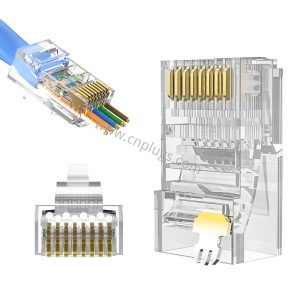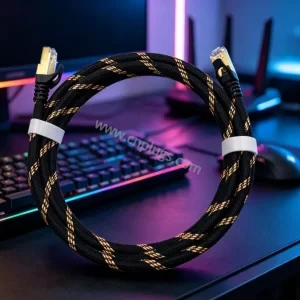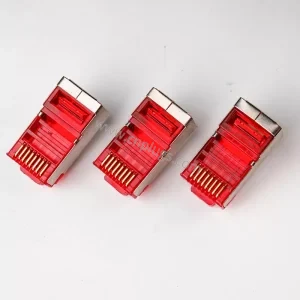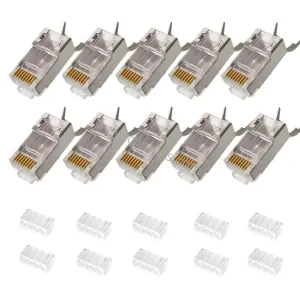
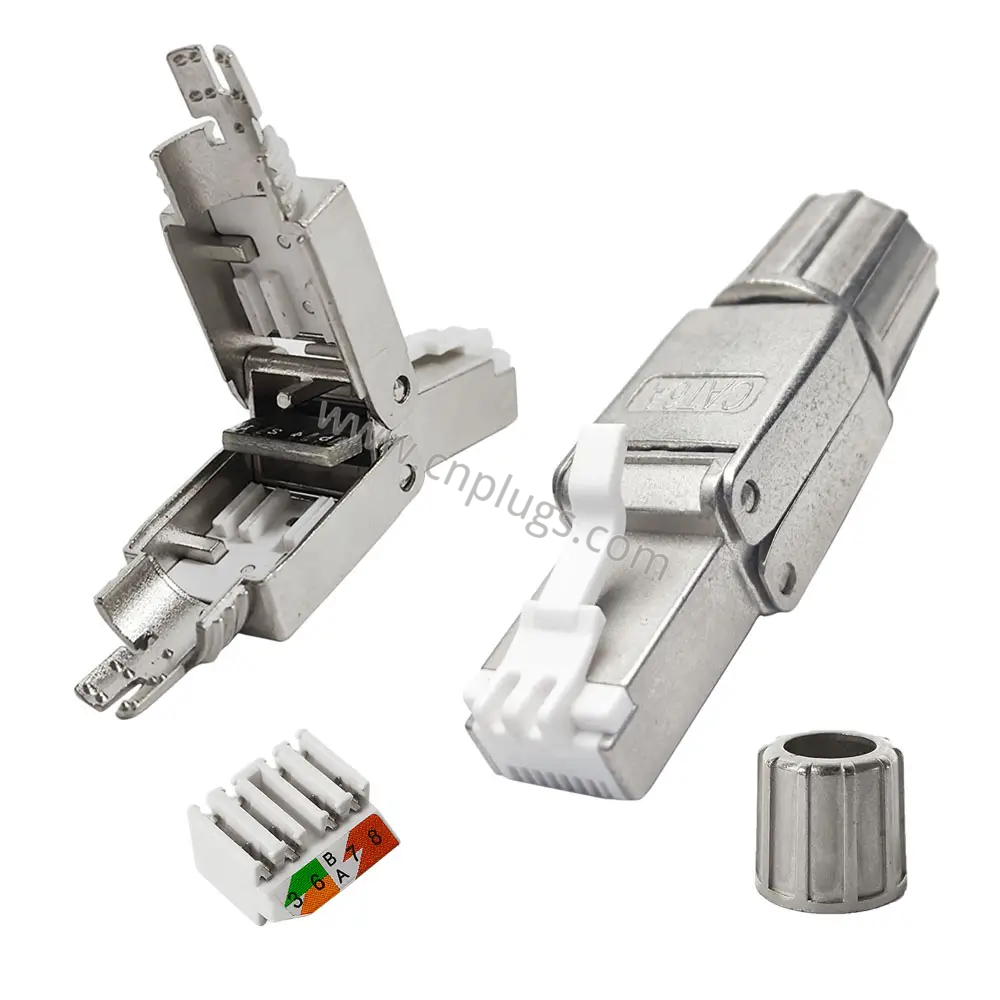
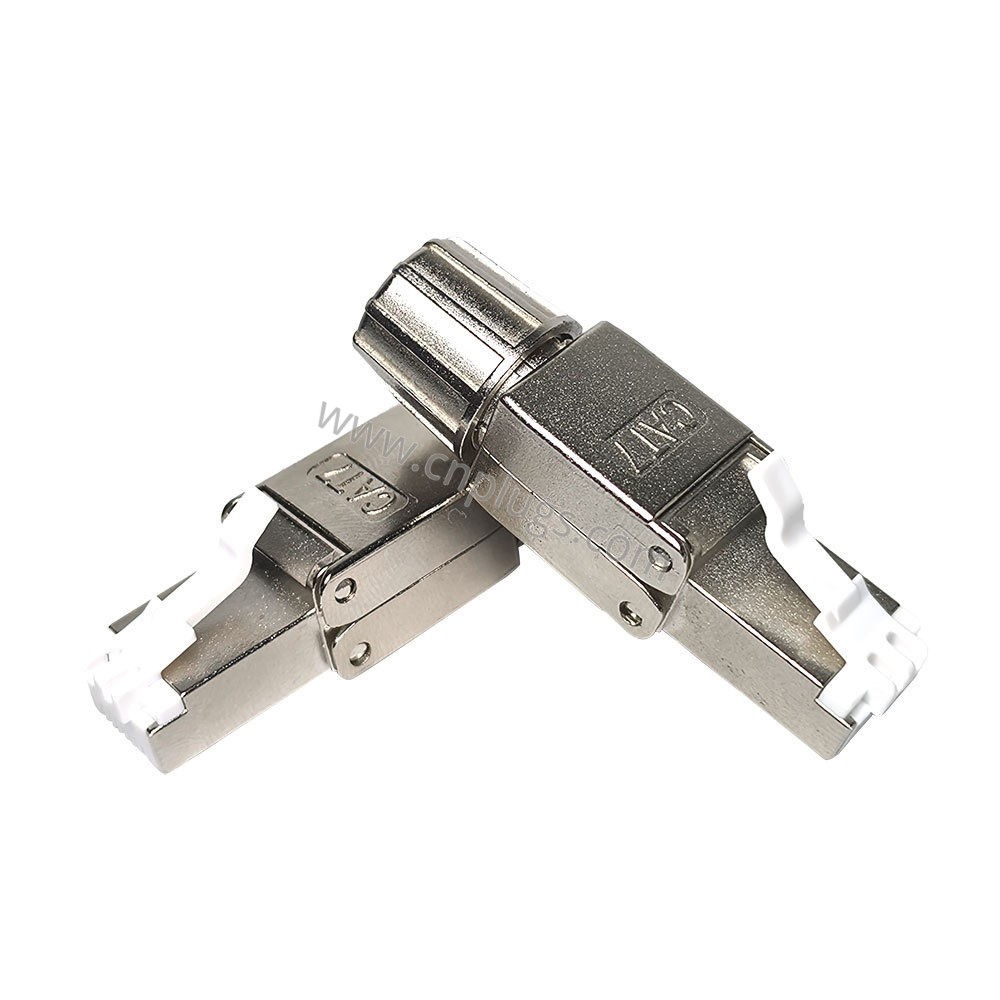
Cat6A Shielded Toolless Field Termination Plug – Zinc Alloy Shell 8P8C STP/FTP RJ45 Connector for 10Gbps MPTL, No Crimp Tool, Re-Terminable, Custom Logo OEM, Free Samples

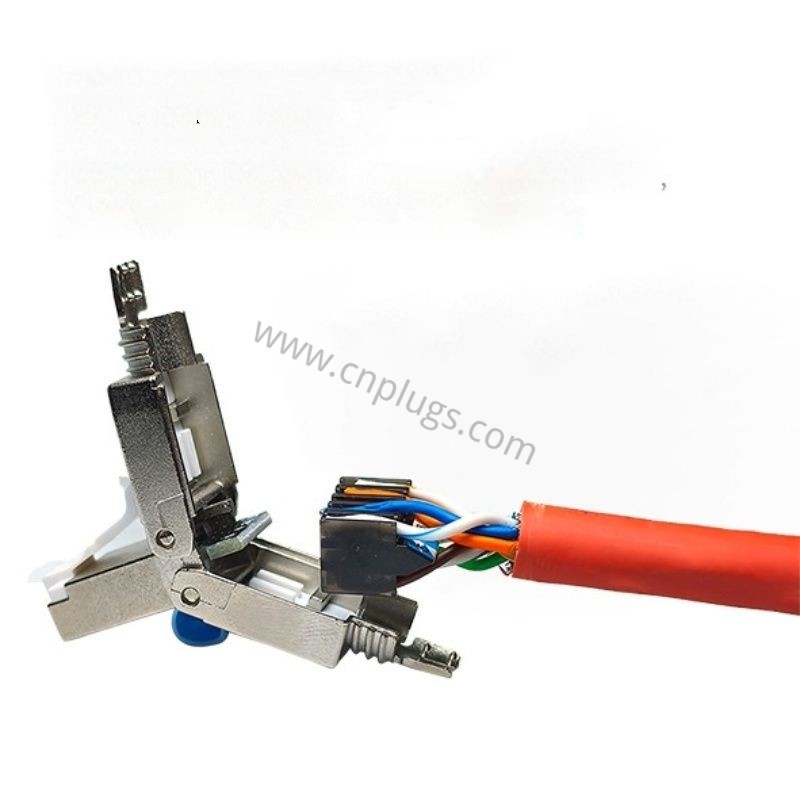
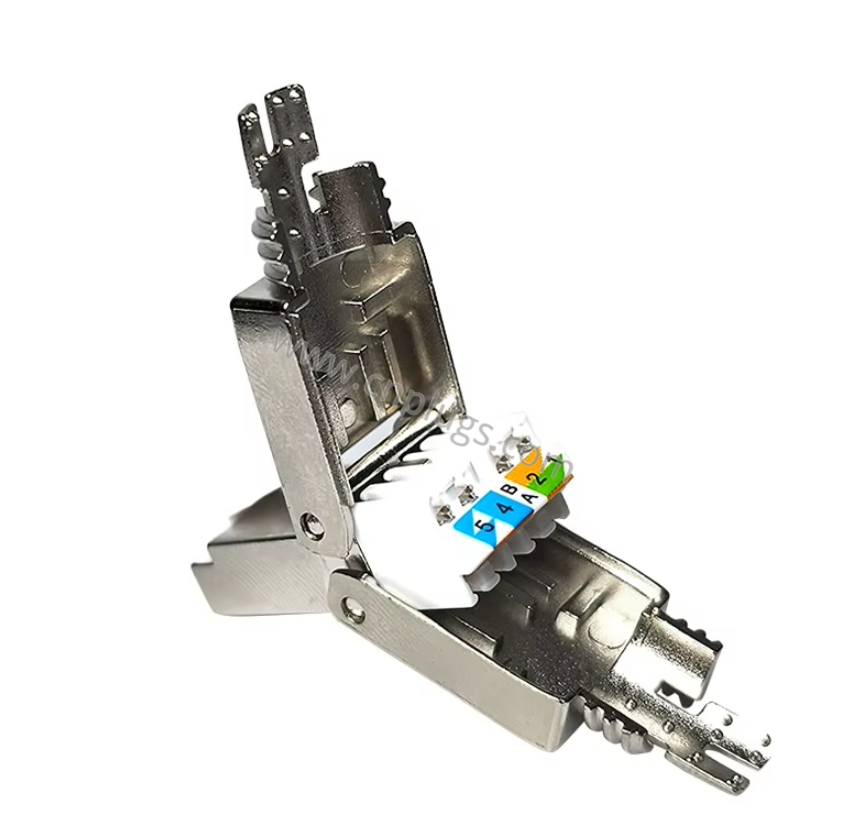
  • No Crimp Tool Required – Lay the conductors into the colour-coded IDC cap, close it by hand or with pliers, trim the tails. Terminates like a toolless keystone jack but ends in a male RJ45 plug, so it goes straight into an access point, camera or switch port.
  • Re-Terminable, Not Disposable – Open the cap, correct the wiring, close it again. A failed certification test costs you two minutes instead of a wasted connector and a re-pull. Crimp plugs are single-use by design; this one is not.
  • Built for MPTL Runs – Modular Plug Terminated Links are a recognised topology in ANSI/TIA-568.2-D: solid horizontal cable direct to the device, no outlet, no patch cord. This plug is designed for that job and certifies as an MPTL with a Fluke DSX or equivalent.
  • True Cat6A / Class EA Performance – 500 MHz, 10GBASE-T to 100 m. An internal PCB leadframe holds pair geometry and compensates crosstalk the way a quality jack does, instead of relying on how steady the installer’s hand was.
  • Die-Cast Zinc Alloy Shell – One-piece 360° metal body, not plated plastic and not a folded sheet-metal wrap with seam gaps. Survives ceiling voids, camera housings, pole mounts and industrial cabinets.
  • Continuous Shield Path – Integrated shield clamp bonds the foil, braid and drain wire to the shell, and the shell mates with the equipment port shield — unbroken continuity from cable to chassis ground for Cat6A F/UTP, U/FTP and S/FTP.
  • Handles Thick, Stiff Cable – Accepts 22–26 AWG solid and stranded, insulated conductor OD up to 1.45 mm and jacket up to 8.0 mm. Heavy shielded Cat6A that will not fit a crimp plug terminates here without a fight.
  • PoE++ Ready – 1.5 A per contact, IEEE 802.3bt Type 4 to 90 W. Larger contact area and a metal shell mean lower thermal rise than a crimp plug under sustained high-power load.
  • 50µ” Gold Over Nickel – ≤ 20 mΩ contact resistance, ≥ 750 mating cycles, 48-hour salt spray. 3µ”, 15µ” and 30µ” plating options for volume programmes.
  • Factory Direct with Full Documentation – 2D drawings, datasheets, RoHS/REACH declarations and Fluke DSX-8000 channel reports. Custom logo from 10,000 pcs, private-label packaging, free samples for qualified buyers.
Category: Brand:
Fast Delivery In-Stock & Ready to Ship
OEM/ODM Service Custom Logo & Package
100% QC Passed Fluke Test Guaranteed

Cat6A Shielded Toolless Field Termination Plug: Jack-Grade 10G Termination in a Male Connector, Built for MPTL

There is a specific moment on every installation that this product exists for. The cable is run, it is solid-core Cat6A, it is shielded, it is stiff, and it terminates at a wireless access point in a ceiling void or a camera in a housing where nobody is going to mount a faceplate. A crimp plug on solid conductor is a compromise. A keystone jack plus a patch cord needs space and a mounting point that are not there. What the job actually needs is insulation-displacement termination with jack-grade electrical performance, in a male connector, installed without a crimp tool at arm’s reach above a ladder. That is a field termination plug, and this is the Cat6A shielded version, made in our own factory.

Field Termination Plug vs Keystone Jack vs Crimp Plug: The Honest Comparison

Search this category and you will find strongly worded advice that plugs are unacceptable for permanent links and keystones are mandatory. That advice is partly right and it is usually written by someone selling keystones. Here is the version we would give you on the phone.

Use a keystone jack wherever the cable ends at a wall plate, a surface box or a patch panel. Outlets are re-patchable, easy to label, easy to document, and a damaged patch cord is a two-dollar swap rather than a re-termination. For standard office cabling, keystones are the right answer and we will tell you so.

Use a crimp plug for patch cords and for stranded cable, where cost per termination dominates and the cable is flexible.

Use a field termination plug when the cable must end in a male connector but the run is solid-core horizontal cable and performance has to be certifiable. Field termination plugs terminate the cable exactly like a toolless keystone — the conductors are seated into insulation displacement contacts against an internal printed circuit board that controls pair geometry — but the connector body is a plug. You get the electrical behaviour of a jack with the form factor of a plug. On a certification tester this shows up immediately: consistent near-end crosstalk and return loss margins, rather than the scatter you get from hand-crimped plugs where results depend on how carefully each conductor was dressed. Installers who certify their work with a Fluke Versiv or DSX consistently report that field termination plugs pass with margin where crimp plugs on the same cable sit borderline.

The three products are not competitors. They are three tools, and a well-run job uses all three.

What MPTL Means and Why It Settles the “Plugs on Solid Cable” Argument

The objection you will hear — that a plug has no place on solid horizontal cable — was valid when the only option was a crimp plug. It is no longer the whole story, because the standards caught up with what the field was already doing.

Modular Plug Terminated Link (MPTL) is a horizontal cabling topology in which the permanent cable runs from the patch panel directly to a plug at the device end, with no telecommunications outlet and no patch cord in between. It is a recognised topology in ANSI/TIA-568.2-D, with defined test limits, and it also appears in TIA-862-B covering intelligent building systems. It was formalised precisely because the explosion of ceiling-mounted and pole-mounted powered devices — wireless access points, IP cameras, access control readers, occupancy sensors, PoE lighting nodes — made the traditional outlet-plus-patch-cord model impractical in thousands of real locations.

So the correct answer to “can you terminate solid cable with a plug?” is: yes, in an MPTL, using a connector designed for solid conductor and for the category, and the link is testable and certifiable against a published limit. The wrong way to do it is a stranded-rated crimp plug squeezed onto solid Cat6A and hoped for. This plug is the right way, and it is why we specify solid conductor compatibility as a headline parameter rather than a footnote. For anyone designing structured cabling systems, MPTL is the topology that closes the gap between the horizontal subsystem and the device.

Why Cat6A Needs a Connector That Controls Geometry

10GBASE-T is an unforgiving transmission scheme. It occupies frequencies to 500 MHz, uses dense PAM-16 line coding, and depends on error-correction headroom that vanishes when a termination introduces impedance discontinuity. At Cat6A frequencies the maximum permitted untwist at the termination point drops to roughly 6.5 mm — half of what Cat5e and Cat6 tolerate — and alien crosstalk between adjacent cables becomes a governing parameter rather than an afterthought.

A hand-crimped plug asks the installer to control all of that by eye, on a ladder, eight metres up. A field termination plug removes most of the variability: the conductors seat into fixed IDC positions on a leadframe whose trace layout and spacing were designed and verified for Cat6A compensation. The pair geometry is set by the tooling, not by technique. That is the entire engineering argument for this product category, and it is why the part costs more than a crimp plug and less than the labour of chasing one intermittent 10G link through a finished ceiling.

Zinc Alloy Shell, Shield Continuity and Grounding

The shell is die-cast zinc alloy in one piece. This matters more than it sounds. A folded sheet-metal shield has seams, and seams leak at exactly the frequencies Cat6A operates in; a nickel-plated plastic shell looks similar in a photograph and provides a fraction of the enclosure performance. A one-piece die-cast body forms a continuous conductive enclosure around the contact block, and it is mechanically robust enough to be dropped, stepped on, or pulled through a conduit without deforming the latch.

Shield termination is integrated rather than improvised. The cable foil, braid and drain wire are clamped against the shell by a dedicated shield clamp, and the shell contacts the mating port’s shield when the plug seats. The result is an unbroken path from the cable screen through the plug into the equipment chassis. Two rules govern this in practice. First, never terminate shielded cable with an unshielded connector — the screen then terminates in open air, and an ungrounded foil behaves as an antenna, which is worse than having no shield at all. Second, bond through the connector shells, never with a pigtail wire; a pigtail is an inductor at high frequency and undoes much of the benefit. Where the device end is plastic-bodied and provides no shield path, terminate the shield at the panel end only and document it. Our shielded connector grounding guidance covers the one-end-versus-both-ends question in full.

Technical Specifications

ParameterSpecification
Model No.PR-C6AFT-Z1 (Cat6A shielded toolless field termination plug)
Connector Type8P8C field termination plug, IDC, male RJ45 interface
Category / StandardCat6A, ANSI/TIA-568.2-D, ISO/IEC 11801 Class EA
Recognised TopologyMPTL (Modular Plug Terminated Link), TIA-568.2-D / TIA-862-B
Bandwidth500 MHz
Data Rate10GBASE-T, 10 Gbps to 100 m; backward compatible 1G / 100M
Termination MethodToolless IDC — no crimp tool required; wire cutters only
Re-TerminationYes — cap reopens, connector is reusable
Wiring SchemesT568A and T568B, colour-coded cap
Internal ConstructionPCB leadframe with Cat6A crosstalk compensation
ShieldingOne-piece die-cast zinc alloy shell, 360° coverage
Shield TerminationIntegrated shield clamp onto foil / braid / drain; shell-to-port contact
Compatible CableCat6A and Cat6 F/UTP, U/FTP, S/FTP, STP (solid and stranded); Cat7/Cat7A S/FTP cable certifies as Class EA
Conductor Size22–26 AWG solid and stranded
Insulated Conductor OD1.00–1.45 mm
Cable Jacket OD5.5–8.0 mm
Contact MaterialPhosphor bronze (pure copper alloy)
Contact Plating50µ” gold over 100µ” nickel (3µ” / 15µ” / 30µ” optional)
Current Rating1.5 A per contact — PoE, PoE+, PoE++ IEEE 802.3bt Type 4, 90 W
Voltage Rating150 V AC (rms)
Contact Resistance≤ 20 mΩ
Shell-to-Shell Resistance≤ 50 mΩ
Insulation Resistance≥ 500 MΩ @ 500 V DC
Dielectric Strength1000 V AC / 1 minute, no breakdown
Durability≥ 750 mating cycles
Salt Spray48 hours, no visible corrosion
Operating Temperature-40 °C to +85 °C
Strain ReliefIntegrated cable clamp / boot
ComplianceRoHS, REACH, ISO 9001, UL-recognised materials
Packaging10 / 20 / 50 pcs box, blister card, OEM carton
MOQ / Lead TimeStock from 500 pcs; custom logo from 10,000 pcs; 7–15 days

Termination Procedure

Strip roughly 30 mm of jacket, taking care not to nick the foil. Fold the braid and drain wire back over the jacket. Separate the pairs and untwist only as far as the cap requires — with Cat6A, keep untwist under about 6.5 mm, and resist the habit of untwisting generously “to make it easier”, because that single shortcut is the most common cause of a marginal 10G result. Lay each conductor into its colour-coded channel in the load cap to the front stop. Close the cap firmly by hand or with pliers until it latches; the IDC blades displace the insulation and make contact as it closes. Trim the protruding tails flush. Seat the shield clamp over the folded braid and drain, fit the shell, and tighten the strain relief. Test the link. If a pair is out of place, open the cap, correct it, and close it again — no wasted connector, no second trip.

Factory Direct, Custom Logo and OEM Programmes

Prounta manufactures this plug in our own facility at over 50 million pieces per month across the range, under ISO 9001 process control, with full lot traceability to mould cavity and plating batch. Buying direct means the specification you are quoted is the specification that ships, and that a question about nickel underplate thickness or resin grade gets an answer rather than a shrug. We supply 2D drawings, datasheets, RoHS and REACH declarations, material certificates and Fluke DSX-8000 test reports with quotation.

Custom logo marking is available from 10,000 pieces, along with private-label packaging, your own part numbering and barcodes, and blind shipment to your customers. Plating thickness, shell finish, boot colour and cable entry diameter can all be specified to a programme requirement. Explore the wider toolless field connector range and the Cat6A and Cat8 plug category for adjacent part numbers, or send us your cable specification and we will confirm fitment in writing and ship samples.

Frequently Asked Questions

Do I really need no tools at all?
No crimp tool, no punch-down tool. You need a jacket stripper and a pair of flush wire cutters to trim the conductor tails after the cap closes, and many installers prefer to use pliers to close the cap rather than thumb pressure, especially when they are terminating dozens in a day. That is the whole toolkit.

Can I really reuse it?
Yes, and this is the practical reason to buy this part rather than a crimp plug for critical terminations. The cap reopens, the conductors can be repositioned, and the connector goes back together. The IDC contacts tolerate re-termination — we rate the connector for multiple terminations in normal field use, though a contact that has been opened and closed many times on the same conductor will eventually need a fresh cut of cable. Compare that to a crimp plug, where any error means cutting the plug off and starting again with a new one.

Is a field termination plug better than a keystone jack?
Not better — different. Where the cable ends at a wall plate, surface box or patch panel, a keystone jack is the better engineering and maintenance choice, because the outlet stays re-patchable and a damaged cord is trivially replaced. Where the cable must plug directly into equipment and there is no practical place for an outlet, a field termination plug is the correct part, and an MPTL is the correct topology. Most projects use both.

Can I use this on solid conductor horizontal cable?
Yes — that is its primary purpose. The IDC contacts are designed to straddle and grip solid conductors from 22 to 26 AWG. This is the key difference from a crimp plug, most of which are optimised for stranded patch cable and perform poorly on stiff solid Cat6A.

Will an MPTL pass certification?
Yes. MPTL is a recognised configuration in ANSI/TIA-568.2-D with its own defined test limits, and Fluke DSX and comparable testers include an MPTL test setting. You will need the appropriate plug-end test adapter — a patch cord adapter rather than a permanent link adapter — and you should select the MPTL limit in the tester, not the permanent link limit, or the results will not reflect the topology you actually installed.

My cable is labelled Cat7 or Cat7A. Will this plug work?
Mechanically and electrically, yes — Cat7 S/FTP cable uses the same 8P8C pin assignment, and this connector accepts its conductor and jacket dimensions. Be aware that the link will certify as Cat6A / Class EA, not Class F, because Class F under ISO/IEC 11801 requires GG45 or TERA connectors rather than 8P8C. That is a standards limitation, not a defect in the connector, and it is the normal outcome for the large majority of Cat7 installations, which use shielded RJ45 hardware. Our Cat6A STP/FTP shielded modular plug page explains the category question in more detail.

Does the zinc shell help with PoE heat?
It helps. Under IEEE 802.3bt Type 4 at 90 W, the limiting factor is temperature rise in the contacts and in the cable bundle. This connector’s larger contact area gives lower contact resistance and therefore less self-heating, and the metal shell provides a thermal path out of the connector body that a plastic plug does not. For sustained maximum-power PoE on long runs, also confirm your cable’s bundle derating.

Will it fit through a conduit or a small cable gland?
The shell is slightly larger than a standard crimp plug, which is the unavoidable trade for a metal body and an internal PCB. Check clearance before you pull, and where the route is tight, pull the cable first and terminate afterwards — one of the practical advantages of a field-terminated plug over a factory patch cord.

Do you supply samples and custom branding?
Yes. Free samples for qualified buyers, custom logo from 10,000 pieces, private-label packaging at any volume we quote. Send us your cable make and model and we will verify fitment against its actual conductor and jacket dimensions before you commit to an order.

Scroll to Top
Copied