
Cat5e Shielded Pass Through RJ45 Connector: Feed-Through Termination with a Continuous Metal Shield Path
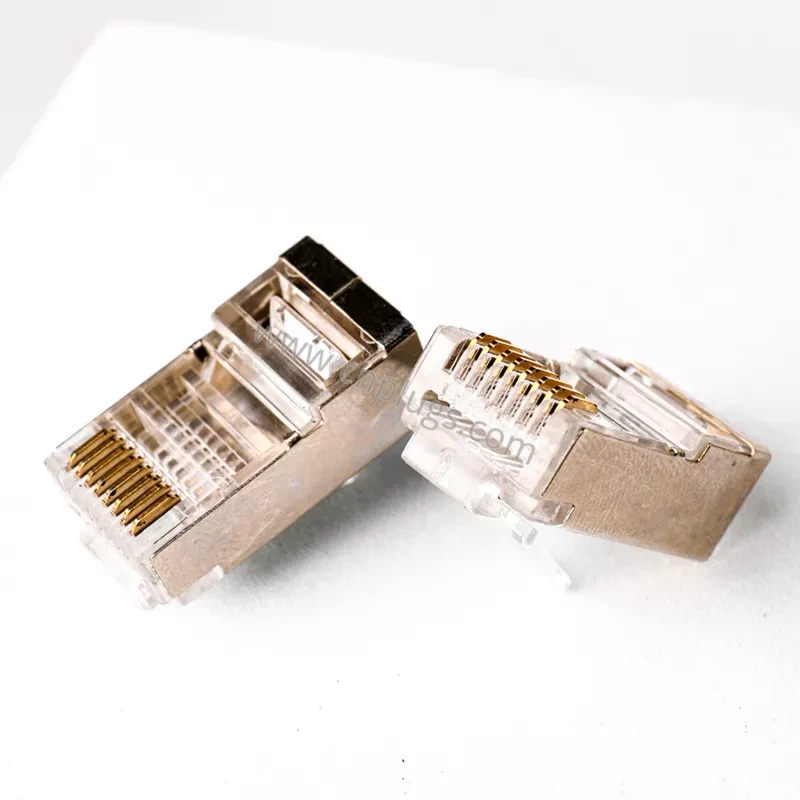
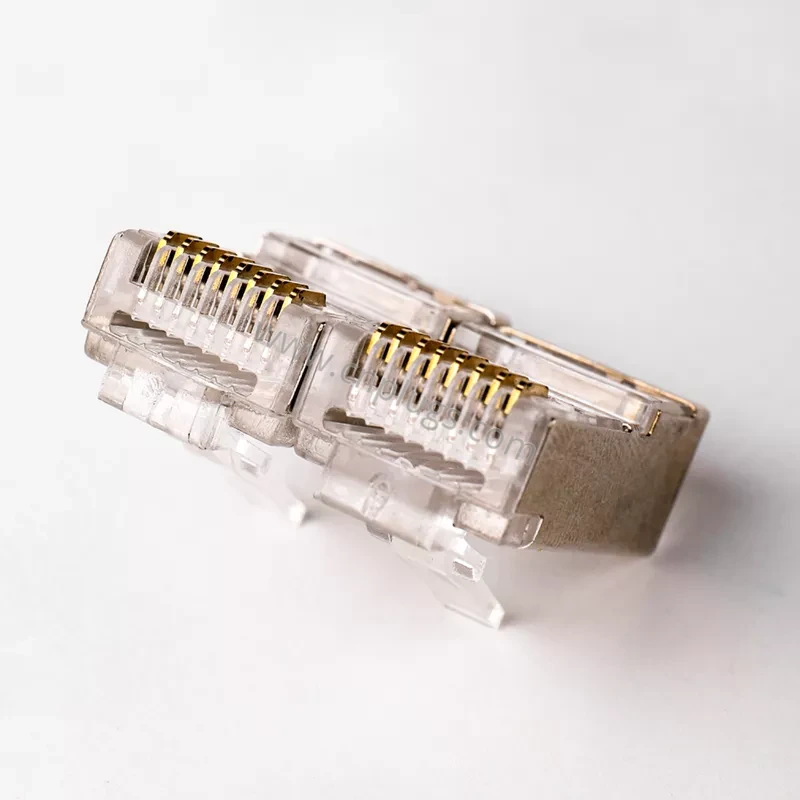
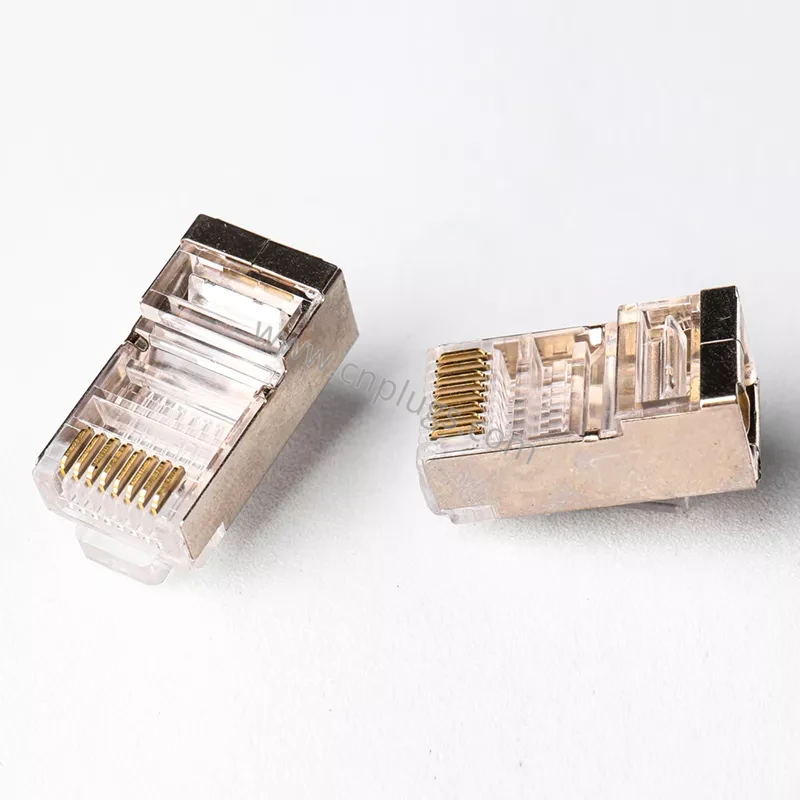
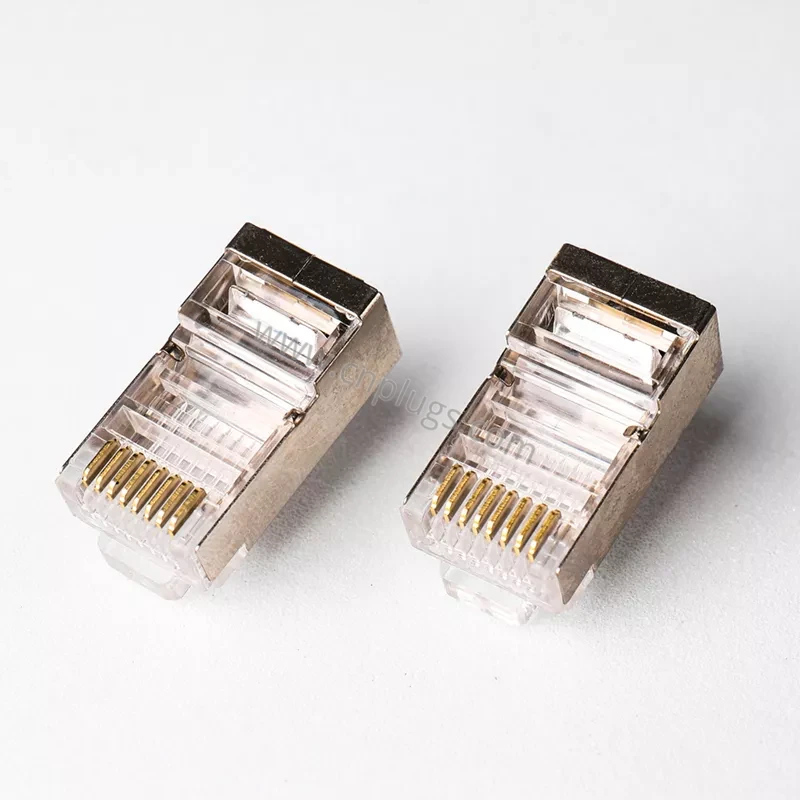
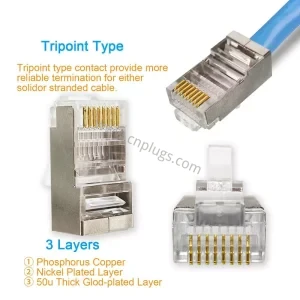
The Prounta Cat5e shielded pass through RJ45 connector combines two things installers usually have to choose between: the visual wire verification of a feed-through plug and the unbroken shield continuity of a metal-shell shielded plug. Conductors are threaded straight out through the open nose, so the technician confirms the colour sequence with their eyes before the crimp rather than squinting into a closed plug and hoping. The nickel-plated shell then bonds the cable foil and drain wire into one continuous path from cable to jack to rack earth. It is built for shielded Cat5e runs in electrically noisy buildings, and it ships direct from our own factory with no trading-company margin in between. This page also answers, honestly, the objections that pass-through connectors attract — because they are worth answering.
Are Pass Through RJ45 Connectors Actually Reliable?
Yes, when the right tool is used, and that qualifier is the whole story. Electrically, a correctly terminated pass-through plug is identical to a standard one: the same contact blades, the same gold plating, the same insulation-displacement mechanism. The real-world failures that fill installer forums nearly all trace to one cause — someone used a standard crimper and then trimmed the protruding wires with side cutters or a knife. That leaves a millimetre of bare copper past the nose, which prevents the plug seating fully in the jack, invites corrosion, and in a shielded jack can contact the metal frame. A proper pass-through crimper carries an integrated blade that shears all eight conductors flush during the crimp cycle, and the difference in outcome is total. Where installers use quality plugs with a matched flush-trim tool, first-pass certification rates typically improve over closed-plug termination, because the wiring error is caught before the crimp instead of after the Fluke test. Buy the tool. It costs less than the labour on one afternoon of rework.
The Shielded Pass-Through Question: Shorting, PoE and How to Terminate Correctly
Because this plug is both shielded and pass-through, it inherits the most specific criticism aimed at the category: protruding conductors touching the metal shell of a shielded jack, with 802.3bt Power over Ethernet present. We would rather publish the correct procedure than pretend the concern does not exist. Trim the conductors flush with a pass-through crimper carrying a sharp blade — replace the blade on schedule, since a dull blade is the root cause of most bad terminations. Then use the technique experienced installers apply on shielded work: after the flush cut, ease the cable back roughly half a millimetre so the copper ends retract inside the nose profile, and complete the crimp. The conductors remain fully seated against the contact blades while no bare metal reaches the mating face. Our nose geometry is designed with that clearance in mind. One further point of reassurance on corrosion: the IDC prongs pierce the conductor behind the cut end, so the signal path never crosses the exposed tip even if it oxidises over time. For PoE-critical outdoor cameras and access points where a vendor’s support policy discourages field-crimped plugs entirely, the correct architecture is a jack and a factory patch cord, or our toolless zinc-alloy shielded field-termination plug. We would rather point you to the right part than sell you the wrong one.
Shield Continuity and Grounding
A shielded plug is only as good as its bonding path. Our shell is drawn from copper alloy and nickel-plated for corrosion resistance and low contact impedance, enclosing the full plug body rather than the nose alone. At the rear, crimp wings close onto the jacket and clamp the foil and drain wire mechanically against the shell interior, so the bond is gas-tight rather than incidental. On insertion, the shell mates with the spring fingers of a shielded jack or patch panel, carrying the shield to the panel frame and onward to the rack earth bar. Bond at both ends through the connector shells, referenced to the same building ground via equipment chassis, and avoid improvised pigtails, which are the usual source of the ground loops people blame on double-ended bonding. The rule that governs component selection is asymmetric and absolute: a shielded plug on UTP cable is merely pointless, but an unshielded plug on shielded cable breaks continuity and can leave the foil acting as an unterminated antenna. If the drum says FTP or STP, the plug must be shielded.
Technical Specifications
| Parameter | Specification |
|---|---|
| Model No. | PR-C5ESP-01 (Cat5e shielded pass-through) |
| Category / Standard | Cat5e, ANSI/TIA-568.2-D, ISO/IEC 11801 Class D |
| Configuration | 8 Position 8 Contact (8P8C), pass-through / feed-through, no load bar |
| Shielding | Fully shielded — nickel-plated copper-alloy shell, 360° coverage |
| Shield Termination | Rear crimp wings onto foil + drain wire; shell-to-jack spring contact |
| Compatible Cable | Cat5e FTP, F/UTP, U/FTP, S/FTP, STP — solid and stranded |
| Contact Material | Pure copper alloy / phosphor bronze |
| Contact Plating | 50µ” gold over nickel (3µ” / 15µ” / 30µ” optional) |
| IDC Prongs | 3-prong, solid & stranded compatible |
| Insert Material | 100% virgin polycarbonate, UL 94V-0 |
| Bandwidth | 100 MHz |
| Data Rate | 1000BASE-T Gigabit Ethernet |
| Conductor Size | 24–26 AWG; insulated OD 0.90–1.05 mm |
| Cable Jacket OD | Up to 6.5 mm |
| Required Tool | Pass-through crimper with integrated flush-cut blade (mandatory) |
| Current Rating | 1.5 A per contact (PoE / PoE+ / PoE++ 802.3bt, 90 W) |
| Voltage Rating | 150 V AC (rms) |
| Contact Resistance | ≤ 20 mΩ |
| Shell-to-Shell Resistance | ≤ 50 mΩ |
| Insulation Resistance | ≥ 500 MΩ @ 500 V DC |
| Dielectric Strength | 1000 V AC / 1 minute, no breakdown |
| Durability | ≥ 750 mating cycles |
| Salt Spray | 48 hours, no visible corrosion |
| Operating Temperature | -40 °C to +85 °C |
| Compliance | RoHS, REACH, ISO 9001, UL-recognised material |
| Packaging | 100 pcs/bag, 50/100 pcs jar, blister card, OEM carton |
| MOQ / Lead Time | Stock from 1,000 pcs; custom logo from 10,000 pcs; 7–15 days |
Factory Direct and Private Label
Stamping, plating, injection moulding, assembly and testing all happen in our own plant, and this plug is sold to you directly. Pricing comes off production cost rather than through an exporter’s margin; engineering requests — a different bore, shell finish, plating thickness or nose profile — are answered by the people who own the tooling and become drawings rather than refusals; and every batch ships with its own Fluke DSX-8000 report, so non-conformities are corrected at source. Volume buyers are welcome to audit the line. Private-label options include laser-marked and mold-engraved logos, custom shell finishes and full retail packaging with your barcode and SKU, all approved from artwork and 3D renderings before tooling is cut. See comparable work on our custom logo Cat5e RJ45 connector and the pure copper connector free-sample programme.
Frequently Asked Questions
Do I need a special crimping tool? Yes, and this is not optional. A pass-through crimper with an integrated flush-cut blade is required. A standard crimper will not trim the conductors, leaving exposed copper that stops the plug seating in the jack. Keep the blade sharp and replace it on schedule.
Are pass through connectors against code? No. BICSI’s TDMM acknowledges pass-through connectors and notes the PoE trimming consideration, but does not prohibit them. What matters is termination quality and the certification result on your tester, not the plug style.
Will these short out inside a shielded jack? Not when terminated as specified. Flush-cut the conductors, back the cable out around half a millimetre so the copper retracts inside the nose, then crimp. The problem arises from wires trimmed with side cutters, never from a correct flush-trim crimp.
Do some equipment vendors object to pass-through plugs? A small number of AV and wireless manufacturers discourage field-crimped plugs on their hardware. Check the warranty terms for the specific device; where field crimping is discouraged, terminate to a shielded keystone jack and use a factory patch cord.
Can I use these on unshielded UTP cable? Physically yes, but with no foil or drain wire the shell floats and provides nothing. Use our unshielded pass-through RJ45 range instead and save the cost.
What about thicker Cat6 or Cat6A shielded cable? This plug takes jackets to 6.5 mm and conductors to 1.05 mm. For 23 AWG Cat6 and Cat6A shielded cable, move up to our Cat6A and Cat8 shielded range, or the Cat6A STP/FTP shielded modular plug.
Why is it called RJ45 if the standard name is 8P8C? “RJ45” is the universal trade term; the formal designation for the eight-position connector is 8P8C, discussed under registered jack. Both refer to the same part in ordinary use.
Do you provide free samples? Yes. Verified business buyers receive a free sample kit and pay courier cost only, credited against the first order. Contact our engineering team for samples, drawings, factory audits or bulk pricing, or browse the full RJ45 connector catalogue.
 WeChat ID: